A hidden plumbing leak does not always begin with water pouring across the floor. More often, the first sign is a ceiling mark that keeps getting darker, a musty smell in one room, or a water bill that no longer matches the way your household uses water.
These problems can be difficult to trace because most supply lines are concealed behind walls, above ceilings, beneath flooring, or inside finished basements. Water may also travel along pipes, framing, or floor joists before it becomes visible, which means the stain you see may not be directly below the leak.
For homeowners in London, Ontario, recognizing the early warning signs can help limit damage and keep a relatively small plumbing repair from becoming a larger restoration project.
Why Hidden Pipe Leaks Are Difficult to Find
A loose-fitting, worn valve, pinhole in a pipe, or damaged appliance connection can release water slowly for weeks before creating an obvious puddle. Some leaks also occur only when a particular fixture is used, such as a shower valve that leaks while the water is running or a dishwasher line that drips during a fill cycle.
Once water escapes, it follows the easiest available path. It may move along a joist, pipe, or wire before soaking into drywall or flooring somewhere else, so opening the surface directly beneath a stain does not always reveal the source.
A proper diagnosis considers when the moisture appears, which fixtures were recently used, how the plumbing is routed, and whether the water meter shows unexplained consumption.
Common Signs of a Hidden Pipe Leak
An unexplained increase in water use is often one of the first clues. Before assuming there is a pipe leak, consider whether guests, lawn watering, renovations, or a new appliance could explain the change. Toilets should also be checked because a worn flapper can waste a surprising amount of water without making much noise.
Physical damage inside the home can provide additional evidence. Yellow or brown ceiling stains, bubbling paint, soft drywall, swollen baseboards, warped cabinetry, and lifting flooring all suggest that moisture is reaching materials that should remain dry.
Pay attention to whether the damage changes after someone showers, runs the dishwasher, does laundry, or uses an upstairs bathroom. A stain that becomes darker after a particular fixture is used can help narrow down the plumbing involved.
A persistent musty smell may appear before visible damage develops. Moisture trapped behind a wall, beneath flooring, or inside a cabinet can create a damp odour even when exposed surfaces feel dry.
Unusual sounds may also deserve attention. A faint hiss, drip, trickle, or running-water sound can indicate that water is moving when it should not be, although toilets, ice makers, humidifiers, water softeners, and other automatic equipment should be ruled out first.
Changes in water pressure can point to a larger issue as well. One weak faucet usually suggests a local fixture problem, while reduced pressure at several fixtures may involve a supply leak, pressure regulator, partially closed valve, mineral buildup, or municipal work.
How to Check Your Water Meter for Unexplained Use
If several warning signs are present, the water meter can help determine whether water is flowing while the home is otherwise inactive.
Turn off all taps, showers, dishwashers, washing machines, irrigation systems, and other water-using equipment. Make sure toilets have finished refilling, then photograph or record the meter reading and avoid using water for approximately 30 to 60 minutes.
Check the meter again at the end of the test. A changed reading confirms that water moved through the system, but it does not identify where the water went.
An ice maker, humidifier, water softener regeneration cycle, slowly leaking toilet, or automatic appliance can affect the result. These should be inactive before the test is repeated.
Homes supplied by private wells require a different approach. If the pump cycles repeatedly while no fixtures are being used, the problem could involve a household leak, pressure tank, check valve, or another part of the well system.
Where Hidden Plumbing Leaks Commonly Develop
Hidden leaks frequently occur near fixtures and equipment with concealed supply connections. Common locations include:
- Shower valves, faucet lines, toilet supplies, and pipes behind bathroom or kitchen walls
- Plumbing between floors, particularly below upstairs bathrooms
- Pipes enclosed inside finished basement walls or suspended ceilings
- Washing-machine hoses, dishwasher lines, refrigerator supplies, and water-heater fittings
- Water softeners, filters, and other treatment equipment
- Buried water-service piping between the property line and the house
A lower-level ceiling stain may appear several feet away from the upstairs fixture causing it. Appliance connections may also leak behind or beneath the equipment while the front remains completely dry.
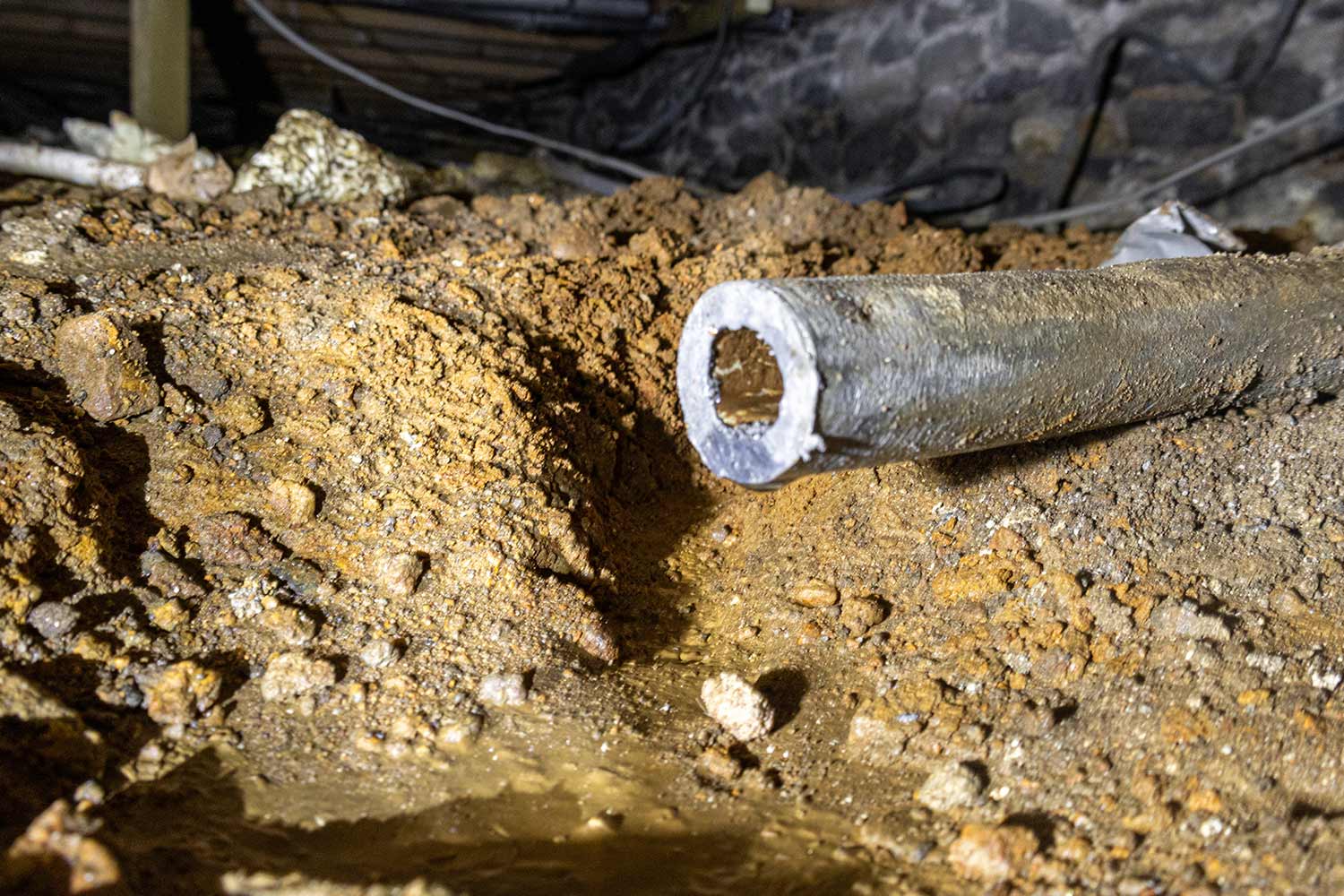
Buried service-line leaks can be especially difficult to identify. Possible signs include increased water use, reduced pressure, soft ground, or an unusually wet area in the yard, but excavation around underground services should be handled by qualified professionals.
What to Do When You Suspect a Leak
When water is actively spreading, the priority is limiting further damage. The following steps can help until the source is repaired:
- Stop using the affected fixture or appliance.
- Close its local shutoff valve when it is accessible.
- Turn off the main water supply if the source cannot be isolated.
- Keep away from wet electrical outlets, fixtures, appliances, and panels.
- Move belongings away from the affected area when it is safe.
- Photograph the damage and contact a plumber promptly.
For a slower or less obvious problem, document the pattern. Record meter readings, review recent water bills, photograph stains, and note whether the sound, smell, or dampness becomes more noticeable after a particular fixture is used.
Do not open a wall based only on where the damage appears. Cutting into the wrong area creates unnecessary repairs and may still leave the leaking pipe untouched.
How Professional Leak Detection Narrows Down the Source
Professional leak detection begins by determining whether the water loss comes from a supply pipe, drain, fixture, appliance connection, or buried service line. A plumber may inspect exposed fittings, observe the meter, isolate sections of plumbing, and pressure-test the system.
Moisture meters can help map damp areas that are not yet visible, while thermal imaging may reveal temperature patterns caused by moisture or escaping hot water. Acoustic equipment can sometimes help locate the sound produced by water leaving a pressurized pipe.
These tools are most useful when combined with the plumbing layout, meter behaviour, fixture use, and visible symptoms. Professional leak detection should narrow down the source before walls, ceilings, or floors are opened.
Once the likely location is identified, the plumber can make a smaller access opening and determine the appropriate repair. The work may involve replacing a fitting, valve, appliance line, or short section of pipe, although more extensive replacement may be recommended when the surrounding plumbing is heavily corroded or has failed in several places.
Why Early Leak Detection Matters
A slow leak can gradually damage drywall, flooring, cabinetry, insulation, and wood framing. Persistent moisture may also create conditions where mould or mildew develops, while wasted water continues to increase monthly bills.
The plumbing repair itself may remain relatively minor, but replacing damaged flooring, rebuilding a ceiling, or removing wet cabinetry can make the overall project much more expensive.
Homeowners dealing with significant water damage should photograph the affected areas, retain repair records, and review their insurance coverage. Sudden water damage may be treated differently from gradual deterioration or a leak that was left unresolved.
Leak Detection and Pipe Repair From Plumbing For Life
Plumbing For Life has served London and the surrounding area since 1997. Our licensed and insured plumbers focus on finding where the water is coming from before recommending repair work, which helps reduce unnecessary openings in walls, ceilings, and floors.
We provide hidden-leak detection and pipe repair in London, Dorchester, Komoka, Strathroy, Ilderton, Mount Brydges, St. Thomas, and nearby communities. Homeowners receive a clear explanation of the problem, upfront pricing with no hidden fees, and repairs backed by guaranteed workmanship.
If your water bill has increased, a wall or ceiling feels damp, or you can hear water moving when every fixture is off, it is worth investigating before the damage spreads. Contact Plumbing For Life to schedule professional leak detection in London, Ontario.