If your faucets have white buildup, your dishes come out spotty, or your tap water has a strong taste, it is easy to assume you need “some kind of filter.”
But water softeners and water filters do different jobs.
A water softener helps with hard water minerals that cause scale. A water filter helps with taste, odour, sediment, and specific water quality concerns that the filter is designed to reduce.
Some London homes only need one system. Others benefit from both. The right choice starts with understanding what is actually in your water, not guessing based on symptoms alone.
What Is the Difference Between a Water Softener and a Water Filter?
A water softener targets hard water minerals, mainly calcium and magnesium. These minerals are what leave scale on faucets, showerheads, dishes, water heaters, and appliances.
The main purpose of a softener is not to make water “cleaner” for drinking. Its job is to reduce hardness so your plumbing, fixtures, and water-using appliances are better protected from scale buildup.
A water filter works differently. It is designed to reduce things like chlorine taste, odour, sediment, visible particles, or other specific water concerns, depending on the type of filter and media used.
The simple difference is this: a softener helps with scale, while a filter helps with taste, smell, particles, and selected contaminants. One does not replace the other because they solve different problems.
How London Water Conditions Shape the Decision
Two homes in London can have different water concerns, even if the water looks clear from the tap.
Some homes are on municipal water. Others may use private wells. Older plumbing, recent utility work, hydrant flushing, water heater condition, and household pipe material can all affect what you notice at the faucet.
That is why testing matters.
If your main issue is scale, spotty dishes, stiff laundry, or dry-feeling skin, hard water may be the problem. If your concern is chlorine taste, odour, sediment, cloudy ice, or particles in the water, filtration may be the better starting point.
If you have both types of issues, your home may need both a softener and a filter.
The goal is to match the equipment to the actual water concern, so you are not paying for a system that does not solve the problem.
Water Softener vs Water Filter: Which Problem Are You Trying to Solve?
| If Your Problem Is… | You Probably Need… |
| White scale on faucets or showerheads | Water softener |
| Spotty dishes and cloudy glassware | Water softener |
| Soap or shampoo that will not lather well | Water softener |
| Towels that feel stiff after washing | Water softener |
| Water heater scale or frequent appliance maintenance | Water softener |
| Chlorine taste or chemical odour | Water filter |
| Sediment or visible particles | Water filter |
| Metallic, earthy, or stale taste | Water filter |
| Better drinking and cooking water | Water filter |
| Scale plus taste, odour, or sediment concerns | Both systems |
This comparison is a helpful starting point, but it is not a substitute for testing. Two homes can have similar symptoms for different reasons. A water test helps confirm whether the issue is hardness, sediment, chlorine, iron, manganese, total dissolved solids, or another concern.
When a Water Softener Makes Sense
A water softener is usually the right choice when the main problem is hard water.
Common signs include:
- White crust on faucets
- Chalky buildup on showerheads
- Spots on dishes
- Cloudy glassware
- Stiff towels
- Dry-feeling skin
- Soap or shampoo that does not lather well
- Water heater or appliance scale
These problems happen because hardness minerals stay in the water as it moves through your home. When the water is heated or dries on surfaces, those minerals can leave deposits behind.
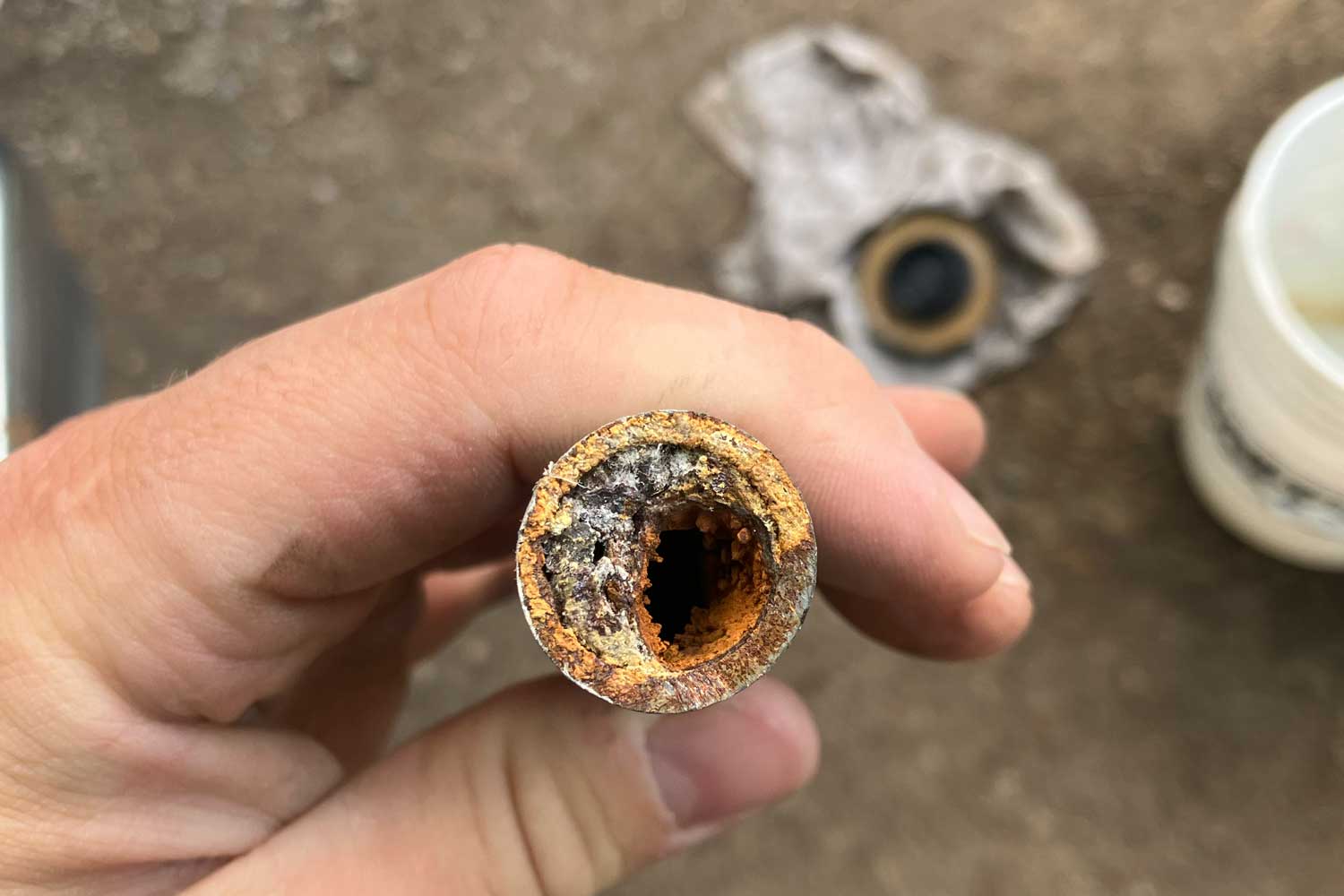
Over time, scale can build up inside water heaters, dishwashers, washing machines, faucets, fixtures, and plumbing lines.
A water softener is usually installed near the main water line so it can treat water before it reaches the rest of the home. Proper sizing matters. A system that is too small may not keep up with household demand. A system that is too large can waste salt and water during regeneration.
A softener is not the right solution for every water concern. It will not remove chlorine taste, fix sediment, or target specific contaminants unless it is paired with the right filtration equipment.
When a Water Filter Is the Better Choice
A filtration system is usually the better choice when your concerns involve taste, odour, particles, or drinking water quality.
You may notice:
- A strong chlorine smell
- Ice cubes with an off taste
- Tea or coffee that tastes different than expected
- Cloudy-looking water
- Particles after plumbing work or hydrant flushing
- Metallic, earthy, or stale-tasting water
The right filter depends on what you want to reduce.
A carbon filter may help improve taste and odour. A sediment filter may help with visible particles. More advanced systems may be needed when testing shows a specific concern that requires targeted treatment.
Filtration can be installed at one point, such as under the kitchen sink or at the refrigerator line. It can also be installed as a whole-home system when sediment, odour, or water quality concerns affect multiple fixtures.
A filter does not solve hard water unless it is part of a broader treatment system designed for that purpose. If scale is your main issue, filtration alone will not stop mineral buildup.
Test Before You Choose a System
Testing should come before equipment selection. Without test results, it is easy to buy a system that improves one symptom while missing the actual cause.
A proper water assessment looks at the water itself and how your home uses it. This may include hardness, taste, odour, sediment, household size, water usage, flow rate, pipe size, and whether the home is on municipal water or a private well.
Testing also helps determine where the equipment should be installed.
A drinking water concern may only need treatment at the kitchen sink. A whole-home scale issue usually needs treatment before water reaches fixtures and appliances. A sediment issue may need filtration earlier in the plumbing system.
This step helps prevent unnecessary spending. It also helps avoid pressure drops, undersized equipment, over-treatment, and systems that are difficult to maintain.
Common Mistakes That Lead to the Wrong Equipment
One of the most common mistakes is expecting a standard carbon filter to fix hard water. Carbon filtration can improve taste and odour, but it does not remove the calcium and magnesium that cause scale.
Another common mistake is installing a softener to fix chlorine taste or unpleasant odour. A softener may improve how the water feels, but it is not designed to remove the substances that usually cause those complaints.
In simple terms, a carbon filter can help with taste and odour, but it will not fix hard water. A softener can help with scale, but it will not remove the chlorine taste.
Buying equipment online without confirming flow rate, pipe size, water usage, and installation requirements can also cause problems. An undersized system may reduce pressure. An oversized system may waste salt, water, or maintenance resources.
DIY installation can create issues as well. Bypass valves, drain routing, air gaps, programming, and equipment placement all matter. Incorrect setup can lead to leaks, poor performance, wasted salt, pressure issues, or inspection problems.
A professional evaluation helps prevent these mistakes before equipment is purchased or installed.
Why Some London Homes Need Both
Some homes have more than one water issue. In those cases, the best setup may include both a softener and a filter.
The softener usually treats hardness before the water moves through the home. This helps protect plumbing, fixtures, water heaters, dishwashers, washing machines, and other water-using appliances.
The filter is then chosen based on the specific water concern. For many homes, that means a point-of-use filter under the kitchen sink or at the refrigerator line to improve drinking, cooking, and ice water. In other homes, a whole-home filter may be recommended if sediment, odour, or water quality concerns affect multiple fixtures.
Installation order matters because each system has a different job. Sizing matters because both systems need to support the home’s water usage without creating pressure problems. Maintenance also matters, especially when a softener and filter are working together.
The goal is not to add equipment for the sake of it. The goal is to treat the right problem in the right place with a system that fits the home.
Why London Homeowners Trust Plumbing For Life
As a family-owned company serving London since 1997, we focus on clear testing, proper system sizing, and installation that matches the way your household uses water.
Our licensed technicians handle water softener installation, filtration setup, and complete water treatment evaluations with clear, up-front pricing. The process is straightforward: test the water, explain the results, recommend the right system, and install it properly.
If you are not sure whether your home needs a softener, a filter, or both, Plumbing For Life can test your water, walk you through the results, and help you choose the right setup.
Contact Plumbing For Life today to schedule your water treatment consultation.